From the Swad desk Plate costing
What one thali really costs you
By Swad DeskRead time: 4 minutesGoes with: Plate costings
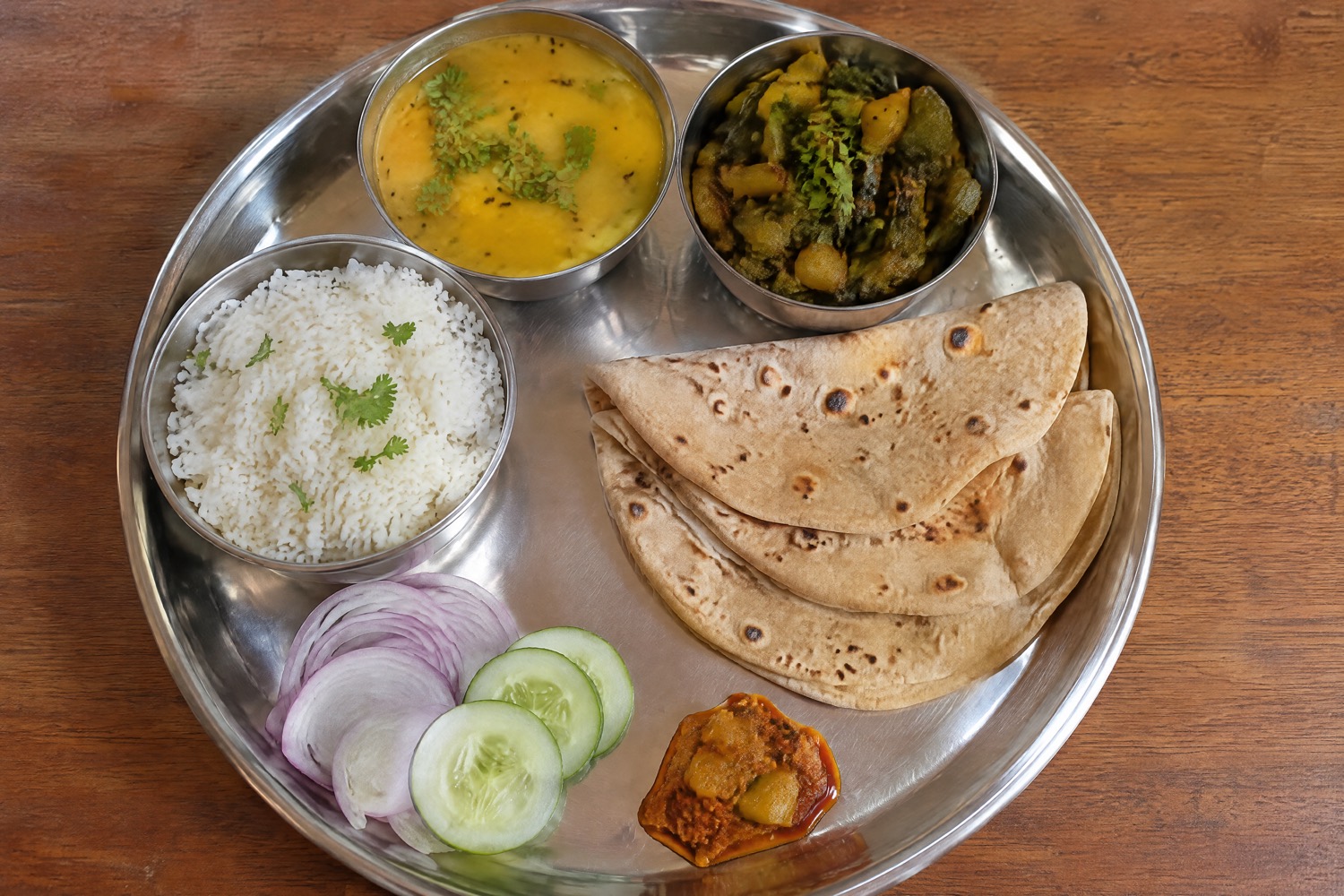
Most home chefs price a thali by looking at what the neighbour charges. The safer way is to add up one batch, line by line, and divide by the plates it makes. Here is a ten plate vegetarian thali costed in rupees: ₹300 of ingredients, ₹150 of gas and packing, ₹45 a plate. Once you know that number, every price you quote is a choice and not a guess.
Cost the batch, not the plate. Nobody cooks one thali. You cook a pot of dal and a kadhai of sabzi, so cost what goes into the pots. For ten plates of dal, sabzi, rice and three chapatis each, one batch might read like this; put in the prices from your own bill. Toor dal 250 g, ₹40. Vegetables 1 kg, ₹60. Rice 800 g, ₹80. Atta 1 kg, ₹45. Oil, ghee and spices, ₹55. Salad and pickle, ₹20. That adds up to ₹300 of ingredients.
Add what you cannot see. Gas is real money: if a cylinder lasts you about thirty such batches, each batch uses roughly ₹30 of it. Packing is larger than most people expect. A box with compartments, a pouch for the dal and a paper bag can come to ₹12 a plate, which is ₹120 for ten. Gas and packing together are ₹150. The batch now costs ₹450, and each plate costs ₹45.
Now choose the price. At ₹120 a plate you keep ₹75 on each, or ₹750 on the batch, for about three hours of shopping, cooking and packing. That is ₹250 an hour. At ₹90 a plate you keep ₹450, or ₹150 an hour. Neither price is wrong, but you should know which one you are choosing. Remember the plates that do not sell: if two of the ten go unsold, the ₹120 batch brings in ₹960 against ₹450 of cost, and you keep ₹510.
Write it where you will find it again. In Swad, the Plate costings tab holds one entry for each dish or thali: what the batch makes, the ingredient cost, the gas and packing cost, the cost per plate and your selling price, with the date you costed it. Use the price watch note for the item that moves the most, such as tomatoes or oil, and cost the dish again when it jumps. One more thing before you sell cooked food: you need your own FSSAI registration, and your buyers should be able to see the number.
More from the Swad desk.